
When choosing a lock for your home, it’s easy to focus on the part you can see — the handle, colour and finish.
But one of the most important parts of a secure door is usually hidden inside it.
That’s the mortise lock.
Mortise locks have been used in homes, offices, hotels and commercial buildings for years. Their concealed design, solid locking mechanism and compatibility with different handles make them a popular option for both main doors and internal doors.
But not every mortise lock is the same.
The lock body, cylinder, door thickness, backset, handle quality and installation can all affect how well the lock performs.
So, before buying a mortise lock for your home, here’s what you should know.
What Is a Mortise Lock?
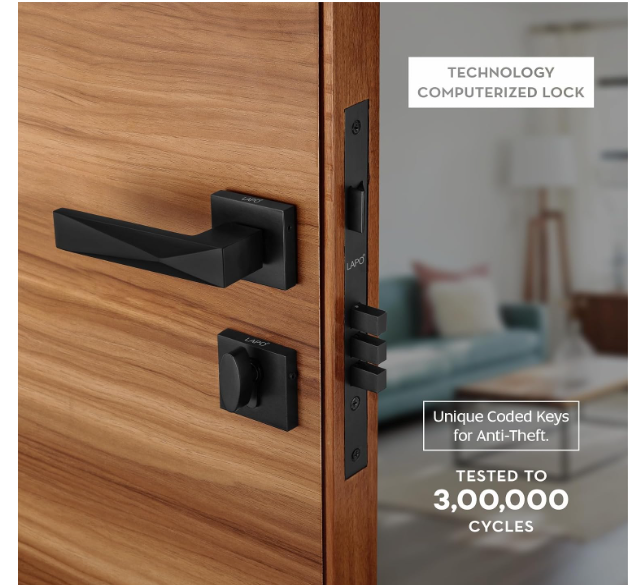
A mortise lock is a locking system installed inside a rectangular pocket, called a mortise, cut into the edge of a door.
Unlike a surface-mounted lock, most of the mortise mechanism remains hidden inside the door.
A typical mortise door lock system can include:
- Mortise lock body
- Latch bolt
- Deadbolt
- Lock cylinder
- Door handles
- Spindle
- Strike plate
- Keys
- Escutcheon or handle plate
When you press the door handle, the latch retracts.
When you turn the key, the deadbolt extends into the strike plate fitted to the door frame.
This combination provides everyday convenience along with a separate locking action.
Why Are Mortise Locks Popular in Indian Homes?
Walk through a modern apartment, independent house or hotel and there’s a good chance you’ll find mortise locks on at least some of the doors.
There are several reasons.
They sit neatly inside the door rather than having a large lock body mounted on the surface. They can be paired with a wide range of handles and finishes, and different mortise configurations can be used for main doors, bedrooms and bathrooms.
For homeowners, that means one locking system can provide a good balance between security, durability, appearance and everyday convenience.
How Does a Mortise Lock Work?
Understanding the basic mechanism makes choosing the right lock much easier.
Inside the door sits the mortise lock body.
The latch bolt keeps the door closed during normal use. Pressing or rotating the handle pulls this latch back into the lock body.
The deadbolt, where provided, performs the main locking function. Turning the key or thumb-turn extends the deadbolt into the door frame.
This is why closing a door and actually locking it are not always the same thing.
The latch keeps the door shut.
The deadbolt locks it.
For a main entrance, understanding that difference is particularly important.
Main Parts of a Mortise Lock
You don’t need to become a locksmith to buy a good lock, but knowing the important components can prevent you from choosing a product based only on appearance.
Mortise Lock Body
This is the mechanism installed inside the door.
It contains the latch, deadbolt and internal components that control locking and unlocking.
The quality of the lock body is one of the most important factors to consider.
Lock Cylinder
The cylinder is where the key is inserted.
When the correct key turns the cylinder, it operates the locking mechanism.
Depending on the mortise system, cylinders may be replaceable separately from the complete lock.
Latch Bolt
The latch holds the door closed without requiring you to lock it with a key every time.
When you push the handle down, the latch retracts.
Deadbolt
The deadbolt extends deeper into the door frame when the door is locked.
For entrance doors, this is an important part of the locking system.
Strike Plate
The strike plate is installed on the door frame and receives the latch and/or deadbolt.
A strong lock fitted against a poorly installed strike plate can compromise the overall installation, so don’t ignore this small component.
Door Handle
The handle operates the latch and is also the most visible part of the lock set.
Mortise systems give homeowners considerable freedom to choose handles according to the design of the door and interior.
Types of Mortise Locks
The phrase mortise lock covers several configurations.
Choosing the right one depends primarily on where the door is located and how it needs to function.
1. Sash Mortise Lock
A sash mortise lock combines a latch and deadbolt in the same lock body.
The handle operates the latch, while the key operates the locking mechanism.
This configuration is commonly considered for doors where you want both normal handle operation and key locking.
2. Mortise Deadlock
A mortise deadlock focuses on the locking bolt and may not include the same latch-and-handle operation as a sash lock.
It can be used where a dedicated locking function is required.
3. Bathroom Mortise Lock
Bathrooms require privacy rather than the same type of keyed security expected from a main entrance.
Bathroom mortise systems can therefore work with a thumb-turn or privacy mechanism that allows the user to lock the door conveniently from inside.
4. Mortise Lock for Bedroom Doors
For bedrooms, homeowners generally want privacy, smooth handle operation and an attractive design.
The security requirements may not be as demanding as the main entrance, so choose the lock according to the room’s actual use.
5. Smart Mortise Lock
Modern smart locks can also use a mortise-style locking body.
Instead of depending entirely on a conventional key, these systems may combine the physical mortise mechanism with fingerprint, PIN, RFID or app-based access.
This can be useful for homeowners who want the physical locking arrangement of a mortise system with modern access features.
Why Choose a Mortise Lock for Your Main Door?
Your main entrance is different from a bedroom or bathroom door.
It is the primary access point to your home.
A properly selected mortise lock for main door use can provide several advantages.
Strong Internal Locking Mechanism
The lock body sits within the door rather than simply being attached to its surface.
When paired with an appropriate cylinder, deadbolt, strike plate and professional installation, it creates a solid mechanical locking arrangement.
Clean Appearance
Most of the mechanism is hidden.
What you mainly see is the handle, cylinder and decorative plate or rosette.
This gives the door a clean and premium appearance.
Wide Choice of Handles
Mortise locks can work with many handle styles.
Depending on the system, you can choose:
- Lever handles
- Handles on plates
- Handles on roses
- Modern straight handles
- Curved handles
- Decorative handles
- Minimal handles
This makes it easier to coordinate your lock with your home’s interior.
Replaceable Components
With compatible systems, individual components may sometimes be replaced without changing the complete door-lock arrangement.
For example, a worn cylinder or handle may be replaceable separately.
Compatibility varies, however, so confirm this before buying replacement parts.
Mortise Lock vs Cylindrical Lock
This is a common question when selecting door hardware.
| Feature | Mortise Lock | Cylindrical Lock |
|---|---|---|
| Installation | Inside a pocket cut into door | Installed through drilled holes |
| Lock body | Concealed inside door | Compact cylindrical mechanism |
| Main-door suitability | Common choice | Depends on model/application |
| Handle options | Wide variety | Usually more integrated |
| Installation complexity | Higher | Generally simpler |
| Replacement | Measurements must match | Often simpler |
| Appearance | Premium/customisable | Simple and practical |
| Typical use | Main doors, rooms, hotels, offices | Rooms, offices and general doors |
Neither design should be judged only by its name.
The quality of the actual lock, cylinder, materials and installation matters significantly.
For a main entrance, buyers often prefer a heavy-duty mortise arrangement because of its construction and handle options.
For internal doors where simpler installation is the priority, a cylindrical system may be sufficient.
Mortise Lock vs Rim Lock
A rim lock is mounted mainly on the surface of the door.
A mortise lock is installed inside the door itself.
That creates a noticeable visual difference.
Rim locks can be practical where cutting a deep mortise into the door isn’t desirable or possible.
Mortise locks, meanwhile, provide a cleaner concealed installation and are widely used where the door is designed to accept an internal lock body.
The right choice depends on the door construction, security requirement and existing installation.
10 Things to Check Before Buying a Mortise Lock
This is where many homeowners make mistakes.
A beautiful handle doesn’t guarantee that the lock will fit your door.
Before ordering, check these points.
1. Door Thickness
Start here.
Measure the thickness of your door.
The lock body, cylinder, spindle and fittings need to be compatible with the door.
Never assume that every mortise lock fits every wooden door.
2. Door Material
Is your door made from:
- Solid wood?
- Engineered wood?
- Metal?
- Aluminium?
- Another material?
The installation method can differ.
A lock that works well on one door construction may not be appropriate for another.
3. Backset
The backset is an important mortise-lock measurement.
In simple terms, it determines how far the operating centre of the lock sits from the edge of the door.
The correct backset affects handle placement, appearance and compatibility.
If you’re replacing an existing mortise lock, measure the old lock carefully or take it with you when buying the replacement.
4. Lock Body Size
Mortise lock bodies come in different dimensions.
Don’t order a replacement simply because the handle looks similar.
Check the dimensions of the lock body and existing cut-out.
5. Cylinder Type
Pay attention to the cylinder included with the lock.
Ask:
- What type of cylinder is provided?
- Is it operated by a key on both sides?
- Does it have a thumb-turn on the inside?
- How many keys are included?
- Can the cylinder be replaced separately?
For a main door, the cylinder deserves just as much attention as the handle.
6. Latch and Deadbolt
Check what the lock body actually contains.
If you’re purchasing for the main entrance, understand whether you’re getting a latch, deadbolt or both.
Don’t judge the complete locking system from the exterior handle alone.
7. Handle Material
Handles receive constant physical use.
Look at the material, construction, finish and feel of the handle.
A handle can look excellent in a product photo but feel loose or uncomfortable in daily use.
8. Finish
Mortise lock sets are available in finishes such as:
- Stainless steel
- Matte black
- Antique brass
- Satin finish
- Chrome
- Gold-toned finishes
- Bronze-toned finishes
Choose according to the door and interior, but don’t sacrifice lock quality simply to get a particular colour.
9. Door Direction
Check whether the product is reversible or whether you need to specify the opening direction.
Your installer or hardware seller can help confirm the correct configuration.
10. Installation
A mortise lock requires accurate cutting and alignment.
The lock body must fit correctly inside the door, while the latch, deadbolt and strike plate need to line up properly with the frame.
For this reason, professional installation is strongly recommended, particularly for your main door.
How to Choose a Mortise Lock for Main Door Use
If you’re buying specifically for the main entrance, don’t start with colour.
Use this order instead:
Step 1: Measure your door thickness.
Step 2: Check the existing mortise cut-out if replacing a lock.
Step 3: Determine the required backset and lock-body dimensions.
Step 4: Choose an appropriate latch and deadbolt configuration.
Step 5: Evaluate the cylinder.
Step 6: Check lock-body construction and materials.
Step 7: Select the handle design and finish.
Step 8: Check warranty and manufacturer support.
Step 9: Confirm installation requirements.
This process helps prevent a common mistake: choosing a beautiful handle set first and discovering later that the lock body isn’t suitable for the door.
Should You Buy a Mortise Lock Set or Individual Components?
A mortise lock set can be convenient because compatible components are supplied together.
Depending on the product, a complete set may contain the lock body, cylinder, handles, keys, strike plate and installation hardware.
This is particularly useful when you’re fitting hardware to a new door.
Buying individual components can make more sense when you’re replacing one part of an existing system or creating a customised door-hardware combination.
But compatibility becomes much more important.
A handle, cylinder and lock body that look compatible aren’t necessarily designed to work together.
When in doubt, confirm the specifications with the seller.
What Material Is Best for a Mortise Lock?
There’s no single material specification that automatically makes a complete lock good.
Different parts of a mortise set can use different materials.
You’ll commonly see stainless steel, brass, zinc alloys and other metals used across lock bodies, cylinders and handles.
Instead of relying only on a material name in the product title, look at:
- Lock-body construction
- Deadbolt construction
- Cylinder quality
- Handle material
- Corrosion resistance
- Finish quality
- Warranty
- Manufacturer reputation
The material of the visible handle alone doesn’t tell you the quality of the internal lock.
Mortise Lock Price in India
The mortise lock price in India can vary significantly.
Basic room-door mortise hardware can cost much less than a complete premium main-door lock set.
Price changes according to:
- Lock-body quality
- Cylinder type
- Handle material
- Handle design
- Finish
- Security features
- Brand
- Included accessories
- Warranty
Instead of asking only, “Which mortise lock is cheapest?”, compare what you’re actually getting.
A useful comparison is:
Lock body + cylinder + handle + accessories + warranty + installation requirements
This gives you a much better picture of value than comparing two prices without checking what’s included.
Common Mistakes to Avoid When Buying a Mortise Lock
Choosing Only by Handle Design
The handle is important, but it’s only one component.
Always check the lock body and cylinder as well.
Buying Without Measuring the Door
A wrong-size lock can lead to installation problems or unnecessary modifications to the door.
Measure first.
Ignoring the Backset
The wrong backset can affect handle positioning and compatibility.
Using the Same Lock for Every Door
Your bathroom, bedroom and main entrance don’t necessarily require the same locking arrangement.
Choose according to the purpose of each door.
Ignoring the Strike Plate
The frame-side hardware is part of the locking system too.
It needs to be properly positioned and securely fitted.
Poor Installation
Even a quality mortise lock can perform badly if the door preparation and alignment are incorrect.
Don’t treat installation as an afterthought.
Can You Replace an Existing Mortise Lock?
Yes, in many cases.
But don’t buy a replacement based on appearance alone.
If you’re replacing an old mortise door lock, record important measurements and specifications before ordering the new one.
Ideally, check:
- Lock-body height and depth
- Backset
- Centre measurements where applicable
- Door thickness
- Cylinder dimensions
- Handle/spindle arrangement
- Faceplate dimensions
Taking clear photographs and measurements of the existing lock can also help a hardware seller identify a suitable replacement.
Can Mortise Locks Be Installed on Wooden Doors?
Mortise locks are commonly installed on suitable wooden doors.
However, the door needs enough thickness and material around the lock area to accommodate the mortise pocket correctly.
This is another reason to confirm compatibility before cutting the door.
If you’re installing an expensive main door, discuss the lock specification with your carpenter or installer before the final door preparation.
Is a Mortise Lock Good for a Bedroom?
Yes, a mortise lock can work very well for a bedroom.
But you may not need the same heavy-duty configuration used for your main entrance.
For bedrooms, focus on smooth operation, privacy, handle comfort, suitable locking functionality and a finish that matches the interior.
This can also help keep your hardware budget under control.
Spend more where security requirements are greater instead of automatically installing the most expensive lock on every door.
How Do You Maintain a Mortise Door Lock?
A quality lock shouldn’t require constant attention, but basic care can extend its useful life.
Keep the lock and handle clean.
Avoid forcing the key if the cylinder becomes difficult to operate.
If the door starts sagging or the latch stops aligning with the strike plate, correct the door alignment rather than repeatedly forcing the handle.
Tighten loose handle fittings when necessary.
For lubrication, follow the lock manufacturer’s recommendations rather than applying random oils or sprays into the cylinder.
If the mechanism becomes consistently stiff or unreliable, have it inspected.
Sometimes what appears to be a lock problem is actually a door-alignment problem.
How Long Does a Mortise Lock Last?
There’s no universal lifespan.
Durability depends on the lock’s construction, usage frequency, door alignment, environment, maintenance and installation quality.
A bedroom lock used a few times each day experiences very different wear from a lock on the entrance of a busy office.
That’s why cycle testing, warranty and manufacturer reputation can be useful when comparing products.
For frequently used doors, investing in better hardware can make sense over the long term.
Is a Mortise Lock Better Than a Smart Lock?
They aren’t necessarily competing technologies.
A traditional mortise lock describes a mechanical locking arrangement.
A smart lock describes how access is authenticated and controlled electronically.
Some smart door locks themselves use mortise locking mechanisms.
So your real choice may sometimes be between:
Traditional mortise lock with key access
and
Smart lock with a mortise mechanism and digital access
Choose according to your budget, door compatibility and whether features such as fingerprint, PIN or app access are valuable to you.
If you prefer mechanical simplicity, a traditional mortise lock can be an excellent choice.
If you want keyless convenience, you can investigate compatible smart mortise locks.
Frequently Asked Questions About Mortise Locks
What is a mortise lock?
A mortise lock is a locking mechanism installed inside a pocket cut into the edge of a door. Depending on its configuration, it can contain a latch, deadbolt or both and work with a handle and lock cylinder.
Is a mortise lock good for a main door?
A properly selected and installed mortise lock can be an excellent option for a main door. Pay particular attention to the lock body, deadbolt, cylinder, strike plate, door compatibility and installation quality.
Which mortise lock is best for a main door?
There isn’t one lock that is best for every door. The correct option depends on door thickness, material, dimensions, required backset, cylinder preference, security needs and budget.
What is the difference between a mortise lock and a normal door lock?
“Door lock” is a broad term covering many locking systems. A mortise lock specifically refers to a mechanism designed to sit inside a pocket cut into the door.
Are mortise locks expensive?
Mortise lock prices range considerably depending on the lock body, cylinder, handle material, design, finish, brand and included components. Compare complete specifications rather than price alone.
Can a mortise lock be replaced?
Yes. However, the replacement should match important measurements such as lock-body size, backset and other relevant dimensions. Check compatibility before purchasing.
Can I install a mortise lock myself?
Installation requires accurately cutting the door and aligning the lock with the frame. Unless you have the necessary tools and experience, professional installation is usually the better option.
Are mortise locks suitable for bedroom doors?
Yes. Mortise locks are widely suitable for bedroom applications, although the required locking configuration may be simpler than what you would choose for the main entrance.
What is a mortise lock set?
A mortise lock set generally combines several compatible components needed for the door, such as a lock body, handles, cylinder, keys, strike plate and fitting hardware. Exact contents vary by manufacturer.
Does a mortise lock need a cylinder?
Many keyed mortise systems work with a cylinder, but mortise-lock configurations differ. Check the specific lock body and intended application.
Final Thoughts: Is a Mortise Lock Worth Buying?
A mortise lock may look simple from the outside, but the real value is hidden inside the door.
When correctly selected and installed, it offers a clean appearance, reliable mechanical operation and plenty of flexibility in handle design.
The important thing is to buy it in the right order.
Don’t start with the prettiest handle.
Start with your door type, door thickness, lock-body size, backset, cylinder and required locking function.
Then choose the design and finish.
For your main entrance, give particular attention to the lock body, cylinder, deadbolt and installation quality.
For bedrooms and internal doors, you can prioritise smooth operation, privacy and design according to the room’s requirements.
A mortise lock doesn’t need WiFi, an app or a fingerprint scanner to do its job.
Sometimes, good mechanical hardware installed properly is exactly what a door needs.
Ready to upgrade your door hardware? Explore our range of mortise locks and mortise lock sets for main doors, bedrooms and other residential applications.
Not sure which size will fit your door?
Send us your door thickness and existing lock measurements, and we’ll help you identify the right mortise lock configuration.